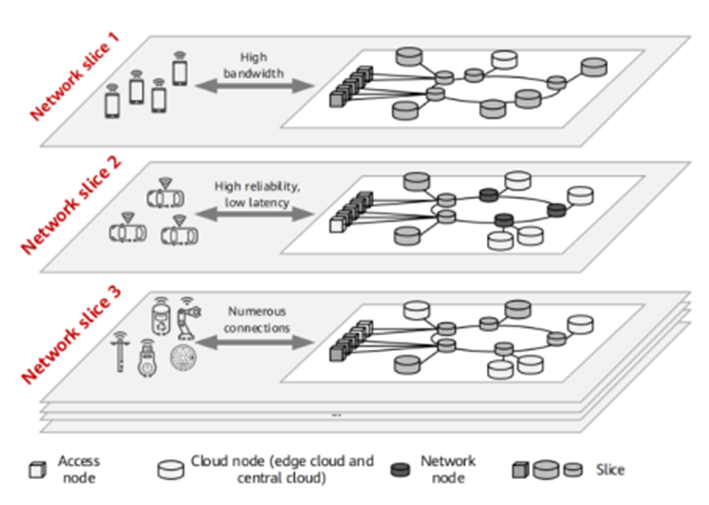
Revolutionizing Network Services with SRv6-Based Network Slicing in the 5G Era
Introduction In this article, we are going to discuss about need for network slicing in 5G era and how SRv6 can help us to achieve network slicing to […]
Introduction In this article, we are going to discuss about need for network slicing in 5G era and how SRv6 can help us to achieve network slicing to […]
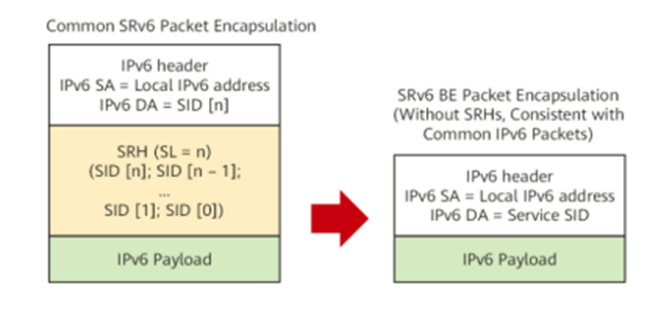
Understanding SRv6 BE in Networking Traditional MPLS (Multiprotocol Label Switching) relies on control plane protocols like LDP (Label Distribution Protocol) and RSVP-TE. SRv6 BE (Segment Routing over IPv6
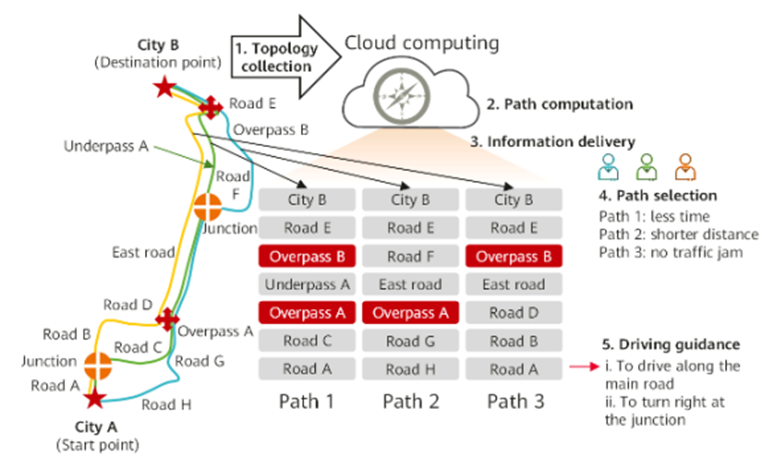
What Is SRV6 TE Policy? SRV6 TE Policy utilizes the source routing mechanism of SR to direct packet forwarding based on a predefined list of segments encapsulated by
Introduction Imagine a world where important services like government, finance, and healthcare rely on super-strong networks. These networks need to be available almost all the time—99.99% to be
Introduction At present, common SRV6 SIDs are primarily categorized as path or service SIDs. For instance, End and End.X SIDs signify nodes and links, respectively, while End.DT4 and

Introduction to SRv6 SIDs In the world of networking, SRv6 (Segment Routing over IPv6) is an innovative technology that revolutionizes how data is routed through networks. One key
Introduction Understanding the nuances of SR-MPLS vs. SRv6 is crucial for network architects and engineers to make informed decisions when designing and implementing their network infrastructures. In the
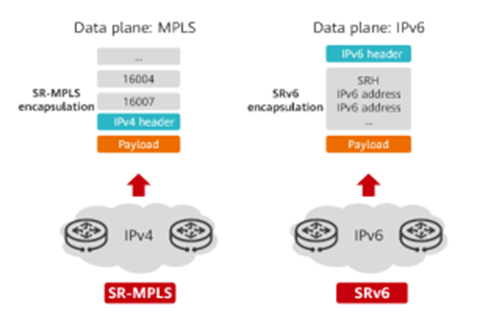
Introduction: Segment Routing with IPv6 data plane, commonly known as SRv6, has emerged as a transformative technology in the networking world. Building upon the foundation of Segment Routing
Introduction IPv6, despite being developed for over two decades, has not experienced widespread deployment and adoption. However, a game-changing protocol called Segment Routing over IPv6 (SRv6) has emerged,